Sri Lanka's Next Growth Story: Key Insights from Dhananath Fernando at the Economic & Tax Symposium 2025
Jul 02, 2026
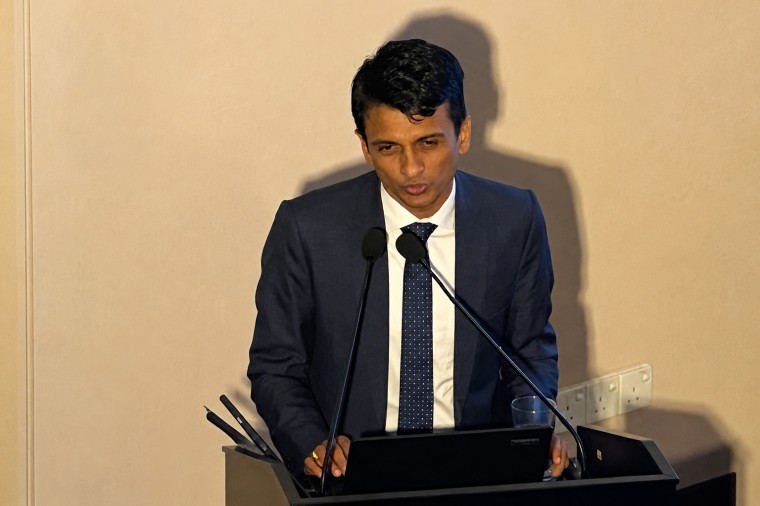
At the Economic & Tax Symposium 2025 organized by the Institute of Chartered Accountants of Sri Lanka (CA Sri Lanka) today (02.07.2026), Dhananath Fernando, CEO of Advocata Institute, presented a comprehensive analysis of Sri Lanka's economic challenges and the reforms required to achieve long-term sustainable growth.
His presentation argued that while Sri Lanka has successfully stabilized its economy after the recent crisis, the next stage is not simply maintaining stability—it is creating opportunities that generate investment, employment, productivity, and exports.
Sri Lanka Has Entered a New Economic Phase
According to the presentation, Sri Lanka has moved beyond the immediate economic crisis and debt restructuring phase. However, maintaining economic stability alone will not be sufficient.
The country's future depends on creating sustainable economic growth through structural reforms that improve productivity, attract investment, and encourage entrepreneurship.
One of the strongest messages of the presentation was that economic growth should ultimately be measured by the opportunities created for people rather than by GDP figures alone.
Demographic Changes Will Shape Sri Lanka's Future
One of the first issues highlighted was Sri Lanka's changing demographic profile.
The data presented showed:
- Birth rates have steadily declined over the past two decades.
- The population is ageing rapidly.
- Net migration has reduced the available workforce.
- The proportion of elderly citizens is increasing while the number of young workers entering the labour force is gradually declining.
These trends mean Sri Lanka cannot depend on population growth to expand its economy in the future. Instead, the country must produce more output with fewer workers. This makes productivity improvements essential.
Higher Productivity Will Become the Main Driver of Growth
The presentation explained that economic growth comes from two broad sources:
- Increasing employment
- Increasing labour productivity
Given Sri Lanka's ageing population, increasing employment alone will not generate sufficient economic growth.
Instead, future growth must come from higher productivity supported by:
- Investment in human capital
- Technological progress
- Capital investment
- Economic restructuring
The presentation highlighted Total Factor Productivity (TFP) as one of the key indicators that must improve if Sri Lanka is to achieve higher long-term growth.
Sri Lanka Needs One Million Jobs and 100,000 Businesses
One of the strongest messages of the presentation was the ambitious target of creating:
One million new jobs
and
100,000 new businesses.
The speaker argued that without significant private sector expansion, Sri Lanka cannot provide sufficient employment opportunities for future generations.
Creating businesses—not government jobs—must become the engine of economic growth.
The Global Economy Has Changed
The presentation also discussed several global trends that Sri Lanka must adapt to.
These include:
- Trade is becoming increasingly influenced by geopolitics.
- Artificial Intelligence is rapidly transforming productivity.
- Global capital has become far more selective.
- Countries are competing aggressively to attract the same investments and jobs.
This means Sri Lanka can no longer compete using low labour costs alone. It must become a more productive, efficient, and investment-friendly economy.
Young Sri Lankans Are Becoming Digitally Ready
Despite demographic challenges, the presentation highlighted one encouraging trend.
Digital literacy among young people aged 15–19 has increased dramatically over the past decade.
Internet usage among this age group has also expanded rapidly.
This growing digital capability represents an opportunity for Sri Lanka to develop:
- Digital services
- Technology businesses
- Knowledge-based exports
- AI-enabled industries
provided that suitable policies and investments are introduced.
Export Diversification Is Essential
One of the presentation's major concerns was Sri Lanka's export performance.
Comparing Sri Lanka with several Asian economies between 2000 and 2015, the presentation showed:
|
Country |
New Export Products |
|
China |
76 |
|
Thailand |
70 |
|
Vietnam |
48 |
|
Philippines |
11 |
|
Malaysia |
10 |
|
Sri Lanka |
7 |
Sri Lanka introduced only seven significant new export products during the period.
The presentation argued that future export growth cannot rely solely on traditional sectors.
Instead, Sri Lanka must continuously develop new export industries and diversify into higher value-added products.
Debt Restructuring Provides Time—Not a Permanent Solution
Another important message focused on Sri Lanka's debt restructuring.
The presentation demonstrated how external debt servicing obligations have become significantly more manageable following restructuring.
However, the speaker emphasized that debt restructuring merely creates fiscal space.
It does not solve Sri Lanka's underlying economic problems.
Without stronger growth, exports, investment, and productivity improvements, future debt sustainability could again become challenging.
Key Structural Reforms Recommended
Towards the conclusion, the presentation outlined several priority reforms required to accelerate economic growth.
These include:
- Accelerating reforms of State-Owned Enterprises (SOEs)
- Allowing private industrial zones
- Implementing customs and trade reforms
- Expanding the "Bim Saviya" programme and strengthening land ownership rights to unlock capital
- Labour market reforms, including the rationalization of public holidays
According to the presentation, these reforms would improve competitiveness, attract investment, and enable faster private sector expansion.
The Role of Land Rights
Special attention was given to land ownership.
The presentation argued that stronger land rights would allow individuals and businesses to unlock the economic value of their assets.
Secure ownership makes it easier to:
- obtain bank financing,
- invest in businesses,
- develop commercial property, and
- increase private sector investment.
Private Sector Must Lead Growth
A recurring theme throughout the presentation was that governments create the environment for growth, but businesses create jobs.
Economic development therefore depends on:
- encouraging entrepreneurs,
- reducing regulatory barriers,
- improving investor confidence,
- attracting foreign direct investment, and
- enabling businesses to expand.
Conclusion
Dhananath Fernando's presentation offered a forward-looking roadmap for Sri Lanka's economic future. While acknowledging the country's progress in achieving macroeconomic stability, he argued that stability alone is not enough.
Sri Lanka now faces a new challenge: transforming economic stability into sustained growth through higher productivity, stronger exports, increased private investment, and structural reforms.
His message was clear—Sri Lanka's long-term prosperity will depend not only on sound fiscal management but also on creating an economy capable of generating one million jobs, supporting 100,000 businesses, embracing technological change, and becoming globally competitive through innovation and productivity.