Education Before Enforcement: Athula Ranaweera's Practical Roadmap for a Better Tax System
Jul 04, 2026 - 02:00 pm
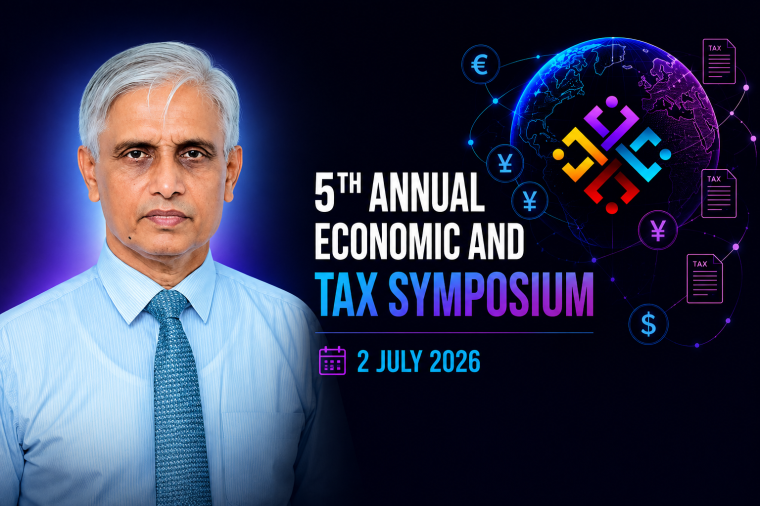
The 5th Annual Economic and Tax Symposium, held on 2 July 2026 and organised by the Faculty of Taxation of the Institute of Chartered Accountants of Sri Lanka (CA Sri Lanka), brought together leading professionals to discuss how Sri Lanka's tax system can better support economic growth through effective policy, administration and innovation.
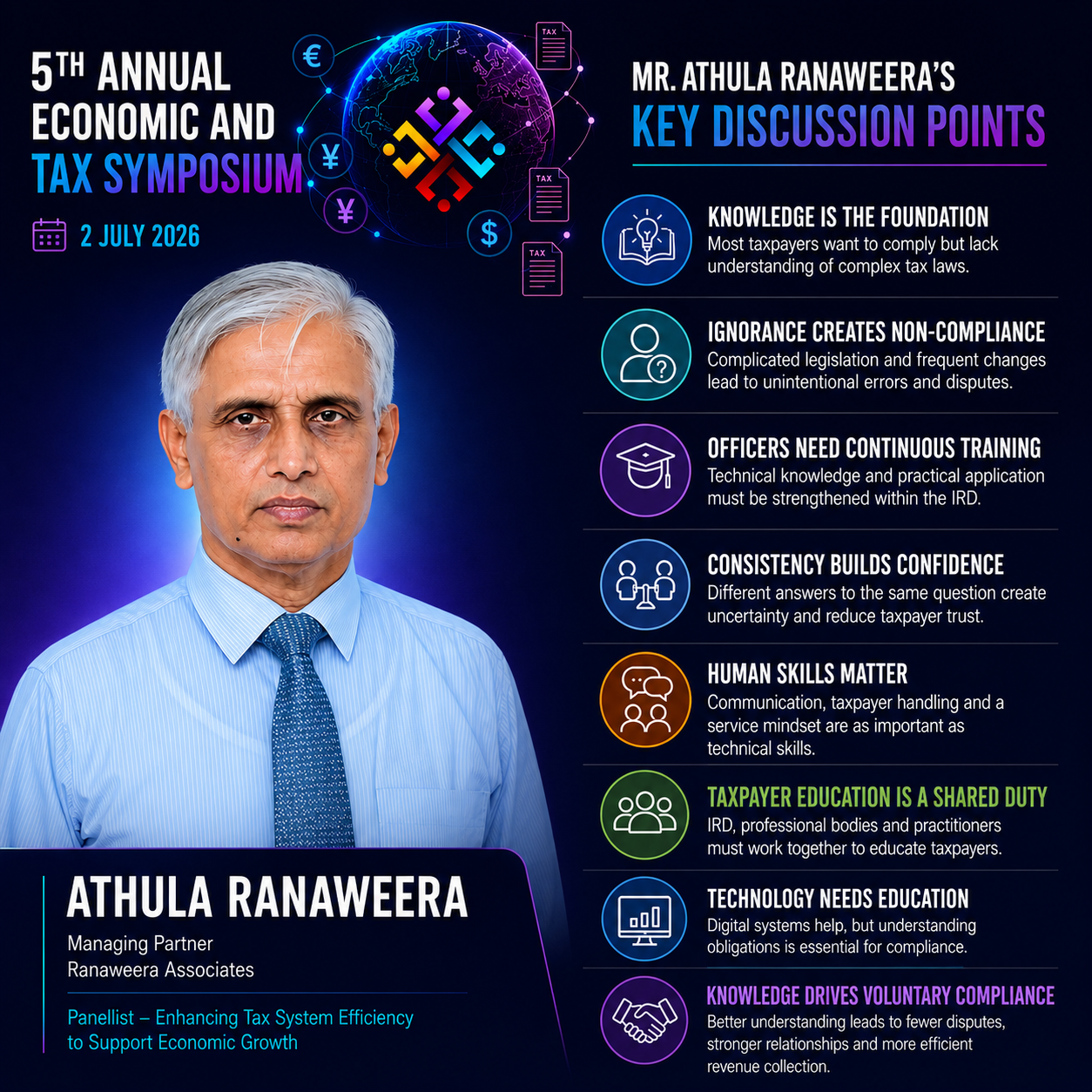
During the panel discussion on "Enhancing Tax System Efficiency to Support Economic Growth," Mr. Athula Ranaweera, Managing Partner of Ranaweera Associates, shared a practical perspective drawn from years of advising taxpayers and dealing with the day-to-day application of Sri Lanka's tax laws.
While other panellists discussed tax policy, investor confidence and digital transformation, Mr. Ranaweera focused on an equally important issue—the practical application of taxation. Throughout the discussion, he repeatedly emphasised that an effective tax system cannot be built through legislation and technology alone. Instead, it must be supported by continuous education for both taxpayers and tax administrators.
His central message was clear: before strengthening enforcement, Sri Lanka must strengthen tax knowledge.
Knowledge Is the Foundation of an Effective Tax System
Mr. Ranaweera began by highlighting what he believes is one of the biggest misconceptions in tax administration—that every non-compliant taxpayer is intentionally trying to evade taxes.
According to him, this is often not the case.
Many taxpayers genuinely wish to comply with the law, file accurate returns and pay the correct amount of tax. However, they frequently struggle because Sri Lanka's tax legislation has become increasingly complex, making it difficult for ordinary taxpayers to understand their obligations without professional assistance.
He explained that lack of knowledge is often a greater challenge than lack of willingness.
When taxpayers do not fully understand the law, mistakes become inevitable, leading to unnecessary disputes, penalties and additional administrative work for both taxpayers and the Inland Revenue Department.
Ignorance Is Often a Bigger Problem Than Tax Evasion
Expanding on this point, Mr. Ranaweera noted that many compliance issues arise not because taxpayers deliberately conceal income but because they simply do not understand the practical application of tax legislation.
Tax laws are regularly amended, new compliance obligations are introduced and technical terminology continues to evolve. For many businesses, especially small and medium-sized enterprises, keeping pace with these developments is increasingly challenging.
He suggested that improving taxpayer education could significantly reduce unintentional errors and increase voluntary compliance.
In his view, investing in education is often more effective than relying solely on enforcement measures.
Tax Officers Must Also Receive Continuous Professional Training
One of Mr. Ranaweera's strongest observations related to the need for continuous professional development within the Inland Revenue Department.
He stressed that technical training should not be limited to taxpayers or tax practitioners. Revenue officers themselves must receive regular education to ensure they remain up to date with legislative changes and practical application.
Drawing from his professional experience, he observed that taxpayers sometimes receive different technical opinions from different officers on the same issue.
Such inconsistencies create confusion and undermine confidence in the tax administration.
He therefore argued that a portion of the government's investment in strengthening revenue administration should be directed towards continuous technical training for tax officers.
Consistency in Interpretation Is Essential
Mr. Ranaweera explained that one of the biggest practical frustrations experienced by taxpayers is inconsistency.
Two officers may interpret the same legislative provision differently, leaving taxpayers uncertain about which interpretation should be followed.
This inconsistency creates unnecessary disputes, delays and additional compliance costs.
He emphasised that taxpayers should be able to approach the Inland Revenue Department with confidence, knowing they will receive consistent and technically sound guidance regardless of which officer they meet.
A predictable and consistent interpretation of tax law strengthens confidence in the administration and encourages voluntary compliance.
Technical Knowledge Alone Is Not Enough
While technical competence is essential, Mr. Ranaweera highlighted another important aspect of tax administration that often receives less attention—how taxpayers are treated.
He explained that tax officers require not only technical expertise but also strong communication and interpersonal skills.
Professional interaction, effective communication and a service-oriented mindset contribute significantly to building positive relationships between taxpayers and the tax authority.
He suggested that future training programmes for revenue officers should therefore combine technical education with practical skills in taxpayer engagement and service delivery.
Taxpayer Education Must Become a National Priority
Mr. Ranaweera emphasised that responsibility for taxpayer education should not rest with a single institution.
Instead, he identified three key groups that must work together to improve tax literacy across the country.
1. Inland Revenue Department
The Inland Revenue Department should continue expanding taxpayer awareness programmes through seminars, webinars, digital platforms and other educational initiatives.
He welcomed improvements already introduced, including SMS notifications and digital communication, but noted that education should become a much larger component of taxpayer engagement.
2. Professional Bodies
Professional organisations such as accounting and taxation institutes have an important role in promoting technical knowledge among their members and educating the wider business community.
Through continuous professional development programmes, publications and public awareness initiatives, these organisations help improve the overall quality of tax compliance.
3. Tax Practitioners
Tax practitioners also play a critical role by educating clients on their obligations and helping businesses understand legislative changes before compliance issues arise.
Rather than focusing solely on preparing tax returns, practitioners can contribute to building a stronger tax culture by promoting good governance and better understanding of tax laws.
Technology Must Be Supported by Education
Although digitalisation continues transforming tax administration, Mr. Ranaweera observed that technology alone cannot solve compliance challenges.
Even the most sophisticated digital systems require users to understand their legal obligations.
If taxpayers lack sufficient knowledge, digital platforms merely change the method of filing rather than improving compliance itself.
He therefore stressed that education and technology should develop together.
Digital transformation becomes significantly more effective when taxpayers understand both the law and the systems they are using.
Building Voluntary Compliance Through Knowledge
Throughout the discussion, Mr. Ranaweera consistently returned to the concept of voluntary compliance.
An effective tax system should encourage taxpayers to comply willingly because they understand both their legal obligations and the reasons behind them.
Education reduces fear, uncertainty and misunderstanding.
It also reduces disputes, strengthens relationships between taxpayers and revenue authorities and improves the overall efficiency of tax administration.
In his view, long-term improvements in revenue collection will be achieved not only through stronger enforcement but also through a better-informed taxpayer community.
Investment in Knowledge Is an Investment in Better Tax Administration
Mr. Ranaweera observed that Sri Lanka has invested considerable effort in modernising its tax legislation and introducing digital systems.
However, these reforms can only achieve their intended outcomes if both taxpayers and administrators possess the knowledge required to apply them effectively.
Continuous learning should therefore become an integral part of Sri Lanka's tax administration strategy.
By improving technical competence, encouraging consistent interpretation and strengthening taxpayer education, the country can reduce disputes while improving both compliance and public confidence.
Conclusion
During the panel discussion at the 5th Annual Economic and Tax Symposium, Mr. Athula Ranaweera highlighted that education is one of the most powerful tools available for improving Sri Lanka's tax system.
His observations demonstrated that stronger tax administration depends not only on modern legislation or digital innovation but also on knowledgeable taxpayers, well-trained tax officers and consistent application of the law.
As Sri Lanka continues modernising its tax framework, investing in tax education at every level—from taxpayers and practitioners to revenue officers—will help strengthen voluntary compliance, improve administrative efficiency and build greater trust between the Inland Revenue Department and the people it serves.
Ultimately, Mr. Ranaweera's contribution reminded the audience that an effective tax system begins not with enforcement, but with understanding.