Govt Resists IMF Push for Secondary Property Tax in 2027 Budget: What Does It Mean?
Jul 27, 2026
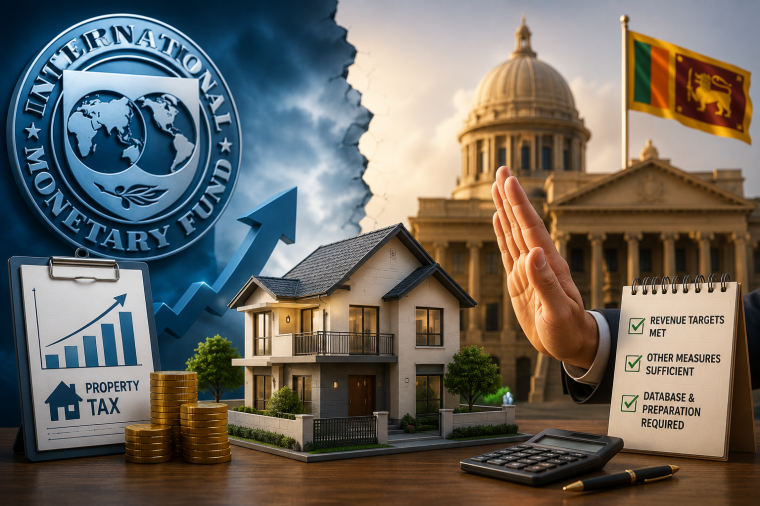
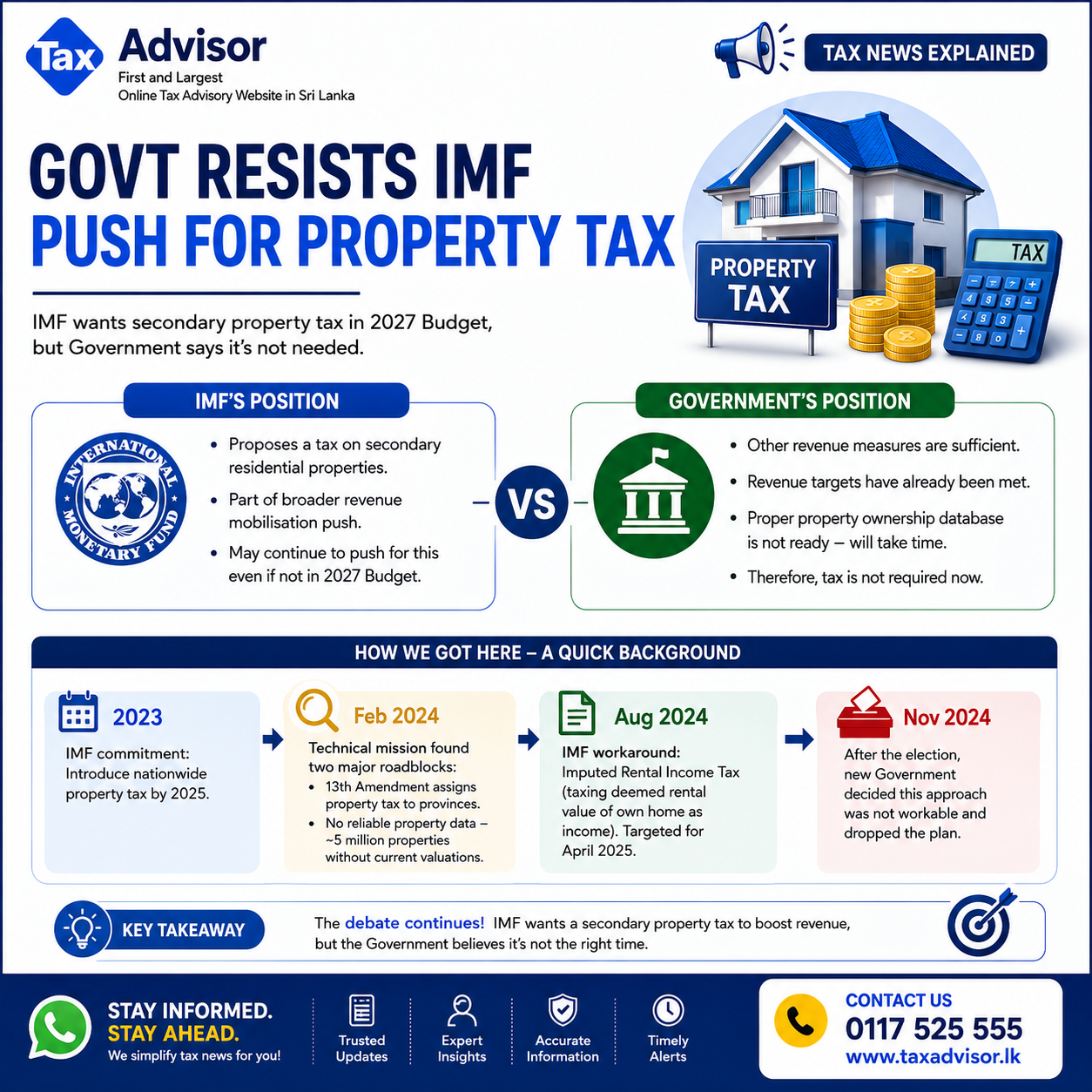
Sri Lanka may not introduce a secondary property tax in the 2027 Budget despite continued encouragement from the International Monetary Fund (IMF), according to recent reports. While the IMF has proposed a tax on second and subsequent residential properties as part of its revenue reform agenda, the Government has reportedly informed the IMF that such a tax is not currently necessary, as revenue targets are already being achieved through other measures.
This development is significant because the introduction of a property tax has been one of the structural reforms discussed under Sri Lanka's IMF-supported economic programme.
What is the IMF Proposing?
According to reports, the IMF has suggested introducing a secondary property tax, meaning a tax that would apply to individuals who own additional residential properties, rather than their primary residence. The proposal forms part of the IMF's broader objective of widening Sri Lanka's tax base and improving long-term government revenue.
Why is the Government Opposing It?
The Government has reportedly presented several reasons for not introducing the tax in the 2027 Budget:
- Current revenue measures are sufficient to meet fiscal targets.
- Revenue collection has already reached the required levels.
- Sri Lanka still lacks a comprehensive and reliable property ownership database.
- Implementing such a tax would require considerable administrative preparation before it can be introduced effectively.
Why Has Property Tax Been Discussed for Several Years?
The proposal is not new.
When Sri Lanka entered the IMF Extended Fund Facility programme, one of the medium-term objectives was to strengthen government revenue through broader tax reforms. Earlier discussions even considered introducing a nationwide property tax.
However, implementation proved difficult due to several practical and legal challenges, including:
- Constitutional issues relating to property taxation and provincial powers.
- The absence of updated valuation data for millions of properties.
- The lack of a complete national property ownership database.
Earlier Alternative Considered
After identifying these challenges, an alternative proposal known as the Imputed Rental Income Tax was explored. Instead of taxing the property itself, it would have taxed the deemed rental value of owner-occupied residential properties.
However, following the change in Government after the 2024 election, that proposal was not pursued further as it was considered impractical.
Could a Property Tax Still Be Introduced?
Possibly.
Although the Government currently believes that a secondary property tax is unnecessary for the 2027 Budget, reports indicate that the IMF may continue to encourage Sri Lanka to implement some form of property taxation in the future as part of its long-term fiscal reform agenda.
What Should Property Owners Know?
At present:
- No secondary property tax has been introduced.
- No legislation has been enacted imposing such a tax.
- The matter remains under discussion between the Government and the IMF.
- Any future proposal would require formal legislative approval before becoming law.
Therefore, property owners should treat the current reports as policy discussions rather than an enacted tax measure.
Conclusion
The latest reports suggest that the Government intends to rely on existing revenue measures rather than introducing a secondary property tax in the 2027 Budget. Nevertheless, given the IMF's continuing focus on expanding Sri Lanka's tax base, property taxation is likely to remain an important topic in future fiscal policy discussions.
Taxpayers and investors should continue to monitor future Budget proposals and any legislative changes before making decisions based on media reports alone.
Important: As of now, there is no official proposal published by the Government to introduce a secondary property tax, nor has any legislation been presented to Parliament. The discussion currently reflects policy consultations between the Government and the IMF regarding the 2027 Budget.